Structural Drying in Bellflower, CA
Structural drying is the part of water damage restoration nobody sees and everybody pays for later if it is skipped. The drying team maps moisture, sizes the equipment to each room and keeps it running until the readings say dry.
(888) 563-9619Walls still wet? Call for structural drying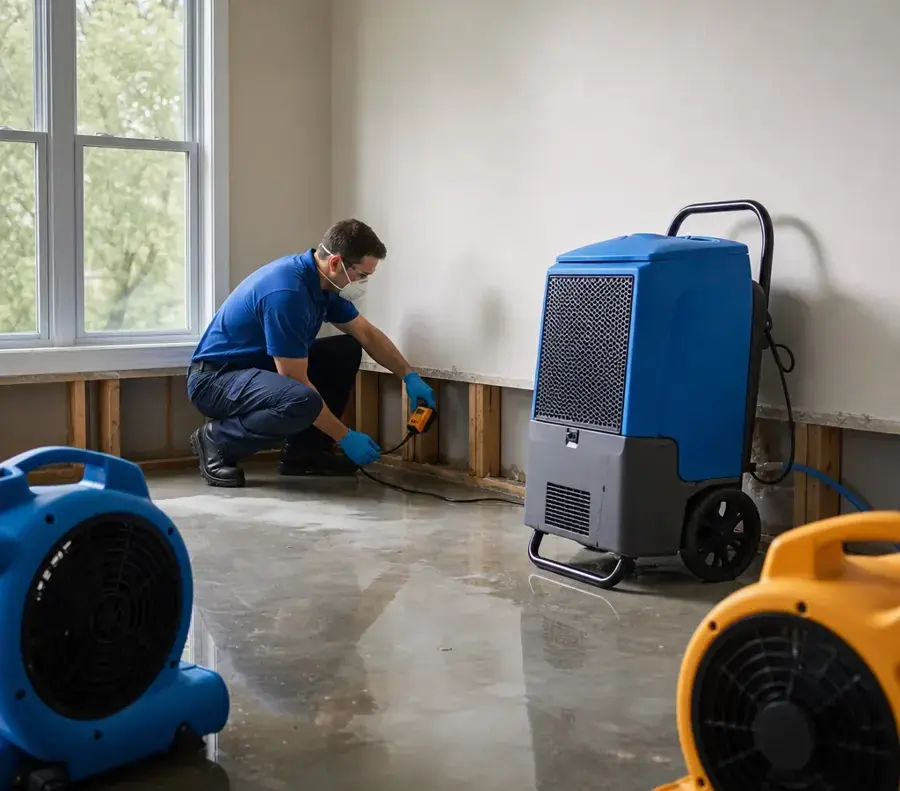
What to do before the drying starts
- 1
Stop the water
Make sure the source is off and no more water is reaching the structure.
- 2
Open the space
Pull rugs, furniture and boxes away from wet walls so air can reach them.
- 3
Keep windows shut
On humid or rainy days, open windows add moisture instead of removing it.
- 4
Note what is wet
Mark the stains, soft spots and swollen baseboards you can see.
- Standard
- IICRC S500, the industry drying standard
- Classes
- Class 1 through 4 set how much equipment a room needs
- Equipment
- Air movers, LGR dehumidifiers, desiccants for Class 4, thermal imaging, meters
- Drying goal
- Within 2 to 4 points of a dry reference material in the same building
How structural drying is handled by the Bellflower restoration crew
Structural drying is measured, not guessed: every wet material has a reading, every day, until it matches dry material in the same building.
Rapid local response
The response team works 24/7 and gets extraction moving across Bellflower, nights, weekends and storm days included.
IICRC S500 drying standard
The drying team works to the industry drying standard and pulls equipment only when readings say dry, not when a surface looks dry.
Claim-ready documentation
Moisture maps, daily readings and timestamped photos go into a drying log that the adjuster, the landlord and the owner can all read.
Bellflower water experts
Post-war slabs, garden apartments and clay sewer laterals are everyday work, so the crew checks the slab and the unit next door, not just the wet room.
What does structural drying cost in Bellflower, CA?
In Bellflower, CA, structural drying typically runs $1,000 to $6,000, mostly driven by how many pieces of equipment run and for how many days. One room of Class 1 or 2 drying sits at the low end; several rooms of slab or plaster sit at the high end.
The drivers are the water category, the square footage, the material class and how fast drying started. For a planning range, try the water damage cost calculator.
- $1,000 to $2,000
One room, Class 1 to 2
Air movers · One dehumidifier · Three days
- $2,000 to $4,000
Several rooms, Class 3
Multiple air movers · LGR dehumidifiers · Daily logs
- $4,000 to $6,000+
Class 4 materials
Desiccant drying · Slab or plaster · Extended days
The structural drying process in Bellflower
- Step 1
Moisture map
The tech who does the walkthrough records readings on every wall, floor and ceiling that could be wet.
- Step 2
Size the equipment
Air movers are set to each room's evaporation load and dehumidifiers to the air volume and class.
- Step 3
Read daily
Moisture and psychrometric readings are logged every day, and equipment is moved as areas dry.
- Step 4
Release on readings
Equipment comes out only when materials sit within 2 to 4 points of a dry reference.
Structural drying in Bellflower is what turns a wet house back into a dry one: the framing, the drywall, the slab and the subfloor, not just the surfaces that feel dry to the touch. It follows every other water service, from a slab leak under a post-war home to a storm flood in a garden apartment.
How the drying is sized
The IICRC S500 sorts losses into Class 1 through 4. Class 1 is a small area of low-porosity material; Class 4 is dense material like concrete, hardwood and plaster that holds water deep inside. The class sets how many air movers and how much dehumidification a room needs.
- Air movers sweep air across wet surfaces to speed evaporation.
- LGR dehumidifiers pull that moisture back out of the air.
- Desiccant dehumidifiers handle Class 4 materials and cooler, drier air.
- Thermal imaging and pinless meters find water behind walls and under floors.
Readings, not a calendar
Equipment stays until the readings say dry, not until a set number of days passes. The drying team compares wet materials with a dry reference material in an unaffected part of the same building, and records temperature and humidity inside and outside the drying area. Those psychrometric logs are the backbone of the claim file. The EPA indoor air quality pages explain why moisture left inside walls matters, and the California Department of Insurance explains how residential claims are documented.
Where structural drying is handled around Bellflower
The Bellflower restoration crew works ZIP codes 90706 and 90707, from Downtown Bellflower and the Artesia Boulevard corridor to the streets by the 605, plus Downey, Paramount, Lakewood and Norwalk next door.
See every area coveredRelated water damage services in Bellflower
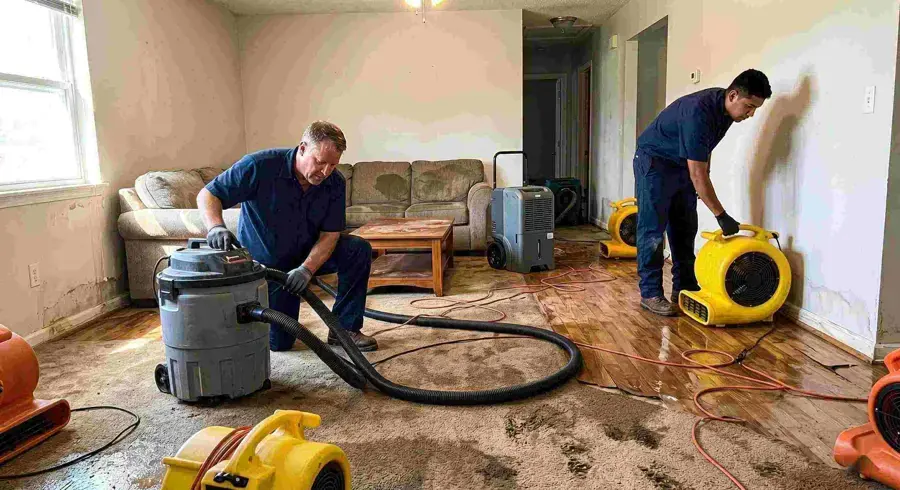 Water ExtractionTruck-mounted extraction pulls standing water before it wicks into pad, baseboard and drywall.View service
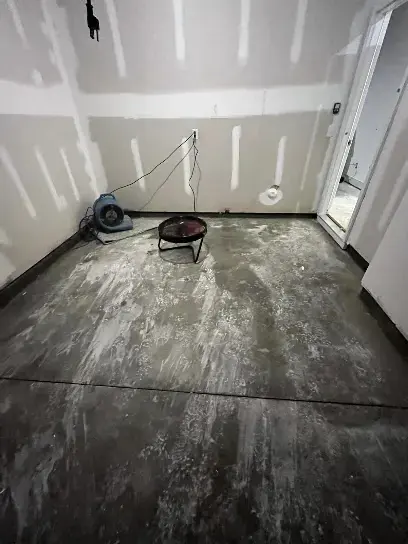 Slab Leak Water DamagePinholed copper under post-war slabs, found with thermal imaging and dried to a reading.View service
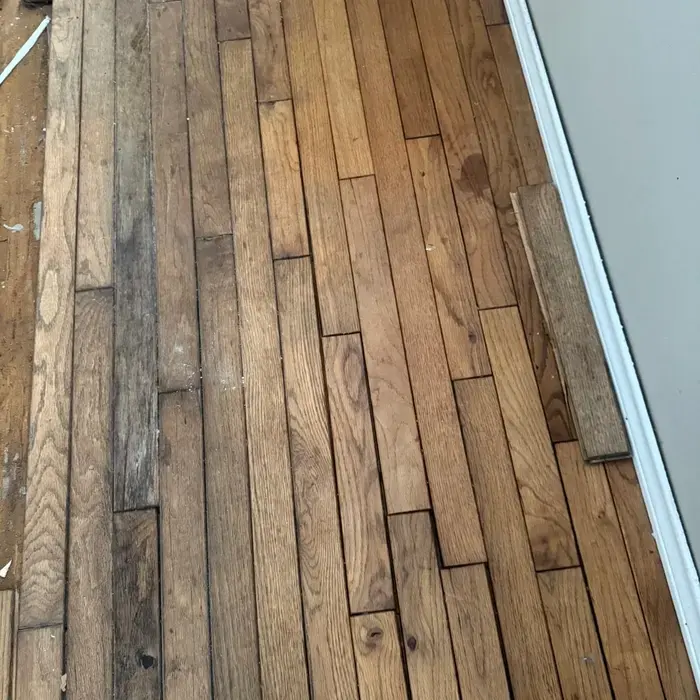 Hardwood Floor Water DamageCupped and lifting planks dried with floor mats before anything is torn out.View service
Structural drying questions in Bellflower
Water in the house right now? Skip the reading and call (888) 563-9619.
What is structural drying?
Drying the building itself, the framing, drywall, subfloor and slab, to a measured standard, rather than just drying surfaces that look wet.
How is dry measured?
Wet materials are compared with a dry reference material of the same type in an unaffected part of the building. The drying goal is within 2 to 4 points of that reference.
Why not just open the windows and run fans?
Fans move damp air around and open windows can add moisture. Dehumidifiers remove the water from the air so materials keep releasing it.
How long does structural drying take?
A contained Class 1 or 2 loss usually dries in three to five days. Class 4 materials like concrete, hardwood and plaster take longer.
What is a desiccant dehumidifier for?
Desiccants pull moisture from air using a drying wheel instead of cold coils. They work well on dense Class 4 materials and in cooler conditions.
What records come with structural drying?
A moisture map, daily moisture readings for every wet material, psychrometric readings of the air and photos, which together make up the drying log for the claim.
Still wet after a leak in Bellflower? Call now.
The drying team maps the moisture, sizes the equipment to each room and keeps it running until the readings say dry.