Slab Leak Water Damage in Bellflower, CA
Much of Bellflower was built on concrete slabs over copper supply pipe, and decades of pressure and hard water wear pinholes in it. The restoration team maps the wet area, opens only what has to come up and dries the slab to a verified reading.
(888) 563-9619Warm spot or wet floor? Call about the slab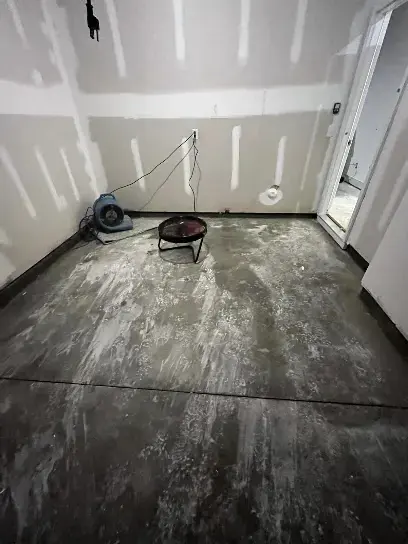
What to do when you suspect a slab leak
- 1
Check the meter
Turn off every fixture and watch the water meter. A spinning leak indicator points to a hidden leak.
- 2
Shut the supply
Close the main shutoff to stop water feeding the leak under the floor.
- 3
Mark the signs
Note warm floor spots, damp carpet edges, cracked tile or a hissing sound, and photograph them.
- 4
Keep the floor on
Leave flooring in place until the wet area is mapped, so only what is wet comes up.
- Water category
- Category 1 from a pressurized supply line, if caught early
- Typical class
- Class 4 once water soaks into the concrete itself
- Equipment
- Thermal imaging, pinless and pin meters, air movers, LGR and desiccant dehumidifiers, drying mats
- Drying goal
- Slab and wall bottoms within 2 to 4 points of a dry reference
How slab leak water damage is handled by the Bellflower restoration crew
A slab leak is two jobs: a plumber repairs or reroutes the line, and the restoration team dries what the leak soaked. The drying side is documented so the claim file shows both.
Rapid local response
The response team works 24/7 and gets extraction moving across Bellflower, nights, weekends and storm days included.
IICRC S500 drying standard
The drying team works to the industry drying standard and pulls equipment only when readings say dry, not when a surface looks dry.
Claim-ready documentation
Moisture maps, daily readings and timestamped photos go into a drying log that the adjuster, the landlord and the owner can all read.
Bellflower water experts
Post-war slabs, garden apartments and clay sewer laterals are everyday work, so the crew checks the slab and the unit next door, not just the wet room.
What does slab leak water damage cost in Bellflower, CA?
In Bellflower, CA, slab leak water damage restoration typically runs $1,200 to $7,500, not counting the plumbing repair. A small wet area under tile sits at the low end; a leak that soaked several rooms of flooring and wall bottoms sits at the high end.
The drivers are the water category, the square footage, the material class and how fast drying started. For a planning range, try the water damage cost calculator.
- $1,200 to $2,500
Small wet area
One room · Targeted flooring removal · Slab drying
- $2,500 to $5,000
Several rooms
Flooring out in a path · Wall bottoms opened · Desiccant drying
- $5,000 to $7,500+
Long-running leak
Whole wing wet · Baseboards and cabinets · Extended equipment days
The slab leak water damage process in Bellflower
- Step 1
Find the wet footprint
Thermal imaging and meters trace the warm, wet path across the slab before anything is removed.
- Step 2
Coordinate the repair
The plumber locates and repairs or reroutes the line; the restoration team keeps the drying plan ready.
- Step 3
Open only what is wet
Flooring and baseboard come up along the wet path, and wall bottoms are opened where readings demand it.
- Step 4
Dry the concrete
Air movers, LGR or desiccant dehumidifiers and drying mats run until the slab meets the goal.
Slab leak water damage in Bellflower usually starts quietly. Post-war tract homes north of Alondra and around the city parks were poured on concrete with copper supply pipe below, and after sixty years of pressure and hard water, that pipe pinholes. The water spreads under tile, laminate and carpet long before anyone sees it.
Signs of a slab leak in a Bellflower home
- A warm spot on the floor, often from a hot water line.
- Damp carpet or swelling laminate along one wall with no obvious source.
- A water meter that keeps moving when every fixture is off.
- A higher water bill with no change in use, or the sound of running water.
The EPA WaterSense Fix a Leak Week page explains how to use the meter to check for hidden leaks.
Why concrete takes longer to dry
Concrete is a Class 4 material: dense, slow to release water, and able to hold moisture for weeks if it is left alone. The drying team pulls flooring along the wet path so air can reach the slab, then pairs air movers with LGR or desiccant dehumidifiers. Readings are compared against a dry area of the same slab, and equipment stays until the numbers match.
Insurance often treats the plumbing repair and the resulting water damage differently. The California Department of Insurance homeowners pages explain how residential policies are organized. Coverage depends on your policy, so it is worth checking with your own insurer.
Where slab leak water damage is handled around Bellflower
The Bellflower restoration crew works ZIP codes 90706 and 90707, from Downtown Bellflower and the Artesia Boulevard corridor to the streets by the 605, plus Downey, Paramount, Lakewood and Norwalk next door.
See every area coveredRelated water damage services in Bellflower
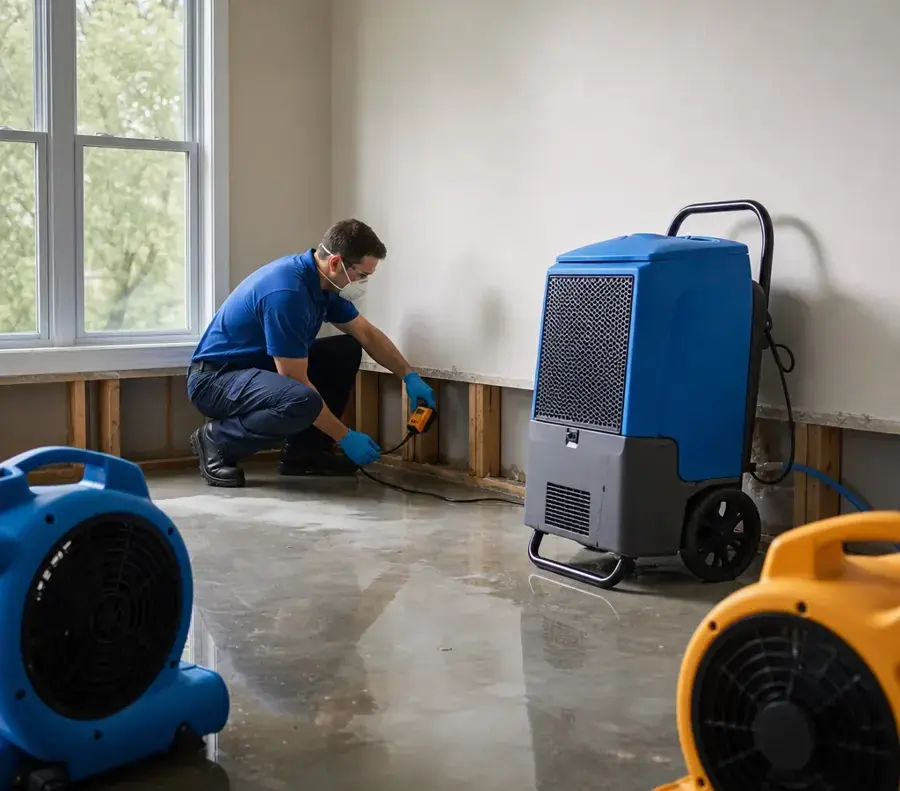 Structural DryingAir movers and LGR dehumidifiers run until readings meet the drying goal.View service
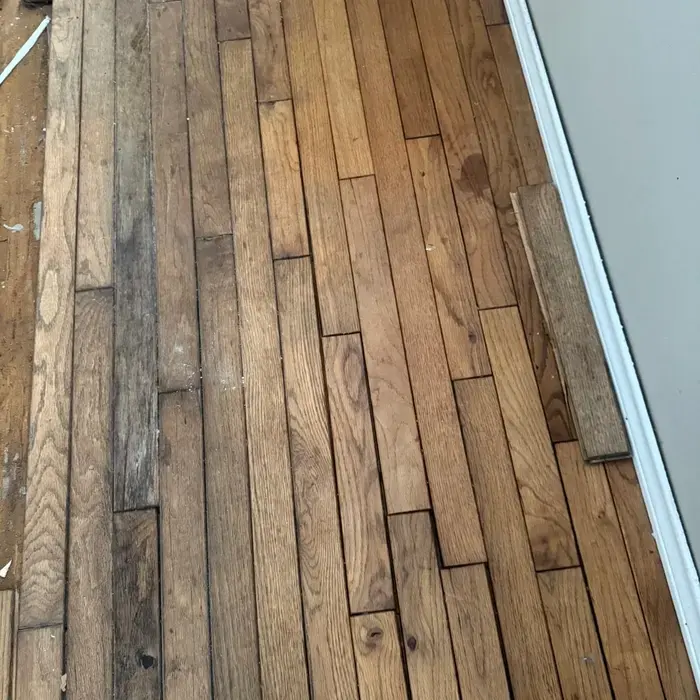 Hardwood Floor Water DamageCupped and lifting planks dried with floor mats before anything is torn out.View service
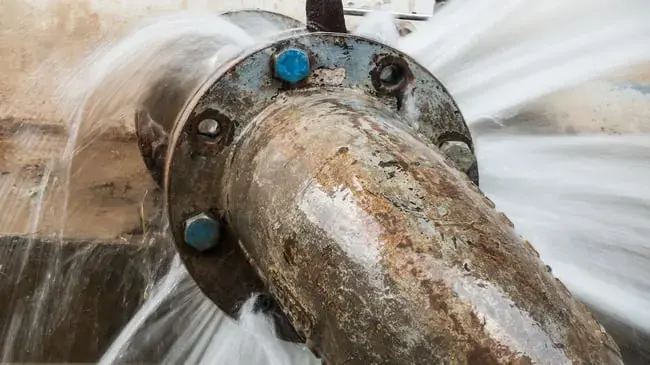 Burst Pipe CleanupSplit galvanized or copper supply lines, extracted and dried inside the wall cavity.View service
Slab leak water damage questions in Bellflower
Water in the house right now? Skip the reading and call (888) 563-9619.
How do I know if I have a slab leak?
Warm floor spots, damp flooring with no visible source, a water meter that moves with every fixture off and an unexplained jump in the water bill are the classic signs. A plumber confirms the leak; the restoration team maps the water it left behind.
Does the whole floor have to come up?
Rarely. A moisture map shows the wet footprint, and flooring comes up along that path so the slab can dry. Dry areas stay in place.
How long does a slab take to dry?
Longer than drywall or carpet. A slab soaked for weeks can need five to ten days of drying with desiccant or LGR dehumidifiers and mats, and the readings decide when it is done.
Who fixes the pipe?
A plumber repairs the line or reroutes it through the attic or walls. The restoration team handles the drying and documentation, which is a separate part of the claim.
Why are slab leaks common in Bellflower?
Much of the housing was built from the late 1940s to the 1960s on concrete slabs with copper supply lines. Pressure, hard water and slab movement wear pinholes in that pipe over time.
Is slab leak damage covered by insurance?
Many policies treat the pipe repair, the access to it and the water damage differently. Coverage depends on your policy, so it is worth checking with your own insurer.
Wet floor with no visible leak? Call now.
The restoration team maps the wet slab, opens only what has to come up and dries the concrete to a verified reading.