Storm Flood Cleanup in Bellflower, CA
Bellflower sits on flat ground between the Los Angeles and San Gabriel rivers, and a strong winter storm can fill storm drains and push runoff across low lots and driveways. The response team pumps out the water, removes what it soaked and dries the structure.
(888) 563-9619Rain water inside? Start the storm cleanup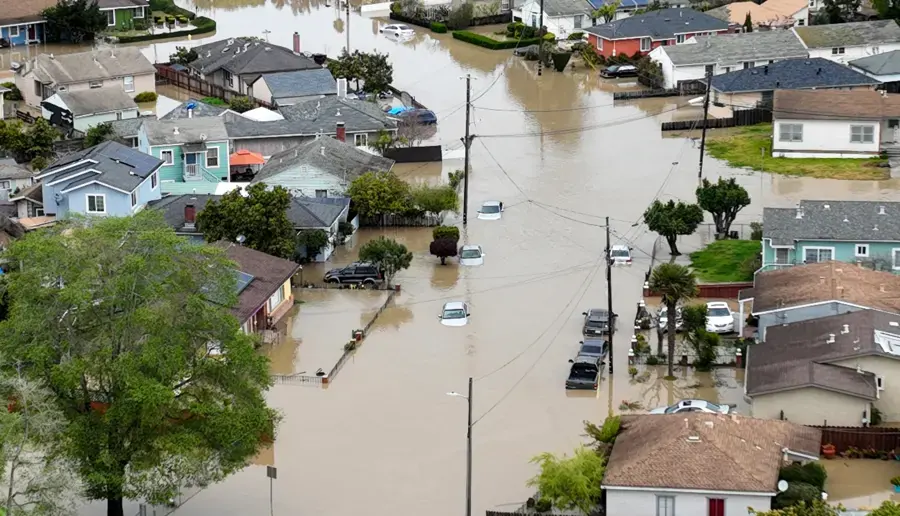
What to do when storm water gets inside
- 1
Stay safe first
Never walk through water near outlets or a running appliance; shut power off from a dry panel.
- 2
Block the entry
Sandbags or towels at the door sill slow more water coming in while the storm continues.
- 3
Move belongings up
Lift electronics, papers and furniture off the floor and out of wet rooms.
- 4
Photograph the water line
Shoot the height the water reached on walls and furniture before cleanup.
- Water category
- Category 3: outside water picks up soil, oil and sewage
- Porous materials
- Carpet, pad and drywall it touched are removed
- Equipment
- Pumps, truck-mounted extraction, air movers, LGR dehumidifiers, HEPA air scrubbers
- Coverage note
- Rising surface water usually falls under flood coverage
How storm flood cleanup is handled by the Bellflower restoration crew
Storm water is dirty water. The order is the same as a sewage loss: extract, remove what it soaked, clean and treat, then dry.
Rapid local response
The response team works 24/7 and gets extraction moving across Bellflower, nights, weekends and storm days included.
IICRC S500 drying standard
The drying team works to the industry drying standard and pulls equipment only when readings say dry, not when a surface looks dry.
Claim-ready documentation
Moisture maps, daily readings and timestamped photos go into a drying log that the adjuster, the landlord and the owner can all read.
Bellflower water experts
Post-war slabs, garden apartments and clay sewer laterals are everyday work, so the crew checks the slab and the unit next door, not just the wet room.
What does storm flood cleanup cost in Bellflower, CA?
In Bellflower, CA, storm flood cleanup typically runs $2,000 to $12,000 or more. Water across a garage or one room sits at the low end; water through several rooms of a slab home sits at the high end.
The drivers are the water category, the square footage, the material class and how fast drying started. For a planning range, try the water damage cost calculator.
- $2,000 to $4,000
Garage or one room
Extraction · Cleaning and treatment · Drying
- $4,000 to $8,000
Several rooms
Carpet and pad out · Flood cuts · HEPA air scrubbing
- $8,000 to $12,000+
Whole ground floor
Large removal · Containment · Extended equipment days
The storm flood cleanup process in Bellflower
- Step 1
Pump and extract
The extraction crew removes standing water with pumps and truck-mounted extraction.
- Step 2
Remove soaked materials
Carpet, pad and drywall touched by storm water come out, usually with a flood cut.
- Step 3
Clean and treat
Floors and wall cavities are cleaned and treated with an EPA-registered antimicrobial.
- Step 4
Dry to the goal
Air movers and LGR dehumidifiers run until slabs and framing meet the drying goal.
Storm flood cleanup in Bellflower follows the winter storm season. Most of the rain arrives from December to March, sometimes as atmospheric rivers that stall over Los Angeles County for days. The city is flat, with the San Gabriel River along its east side and the Los Angeles River to the west, and when storm drains fill, runoff ponds on low lots, garages and back units before it can drain away.
Why storm water is treated as Category 3
Water that crossed a yard or a street carries soil, oil, lawn chemicals and often sewage from overloaded lines. Under the IICRC S500, that makes it Category 3. The restoration team removes carpet, pad and the bottom of the drywall it touched, then cleans and treats the structure before drying.
- South Bellflower below the 91 and lots near the 605 often take water first.
- Garages and converted garage rooms sit low and flood before the house.
- Door thresholds and slab edges are the usual entry points.
Watching the forecast
The National Weather Service Los Angeles office posts flood watches and warnings for the county. The Los Angeles County Public Works water resources division runs the flood control channels and storm drains that carry runoff to the ocean.
Rising surface water is usually covered by flood insurance rather than a standard homeowners policy. Coverage depends on your policy, so it is worth checking with your own insurer.
Where storm flood cleanup is handled around Bellflower
The Bellflower restoration crew works ZIP codes 90706 and 90707, from Downtown Bellflower and the Artesia Boulevard corridor to the streets by the 605, plus Downey, Paramount, Lakewood and Norwalk next door.
See every area coveredRelated water damage services in Bellflower
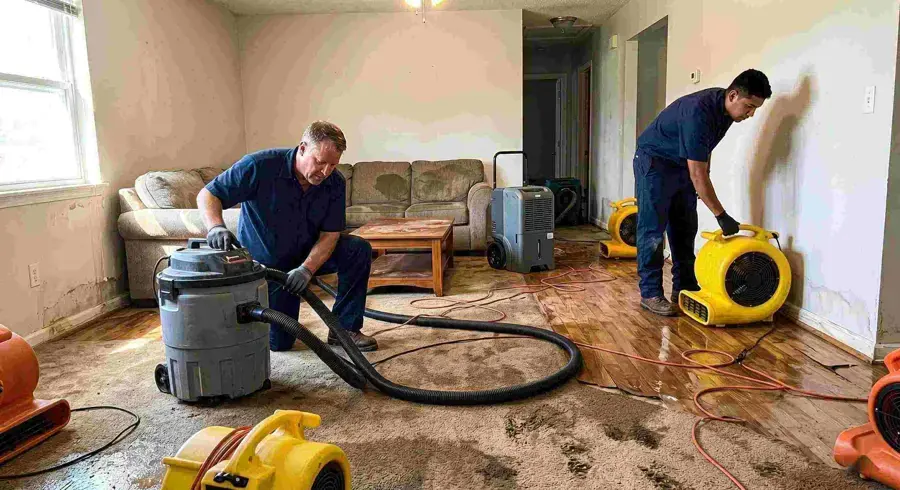 Water ExtractionTruck-mounted extraction pulls standing water before it wicks into pad, baseboard and drywall.View service
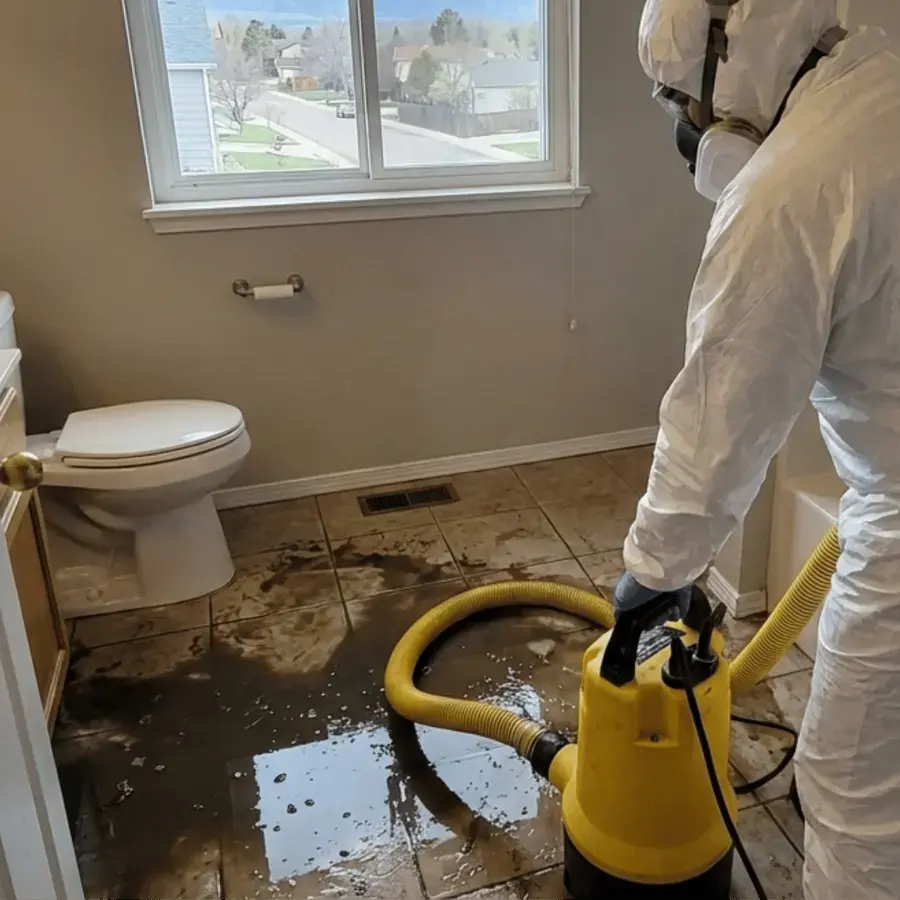 Sewage Backup CleanupCategory 3 backups from root-choked clay laterals, contained and removed before drying.View service
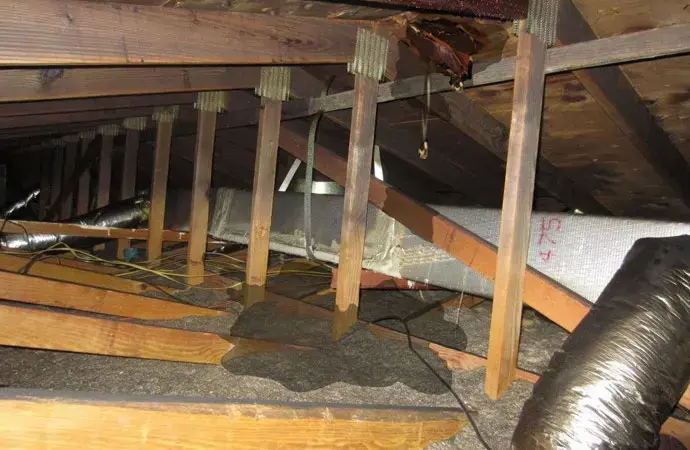 Roof Leak Water DamageFirst-storm leaks through low-slope roofs, dried from the attic down to the ceiling.View service
Storm flood cleanup questions in Bellflower
Water in the house right now? Skip the reading and call (888) 563-9619.
Is storm water dangerous?
It can be. Water from outside carries soil, chemicals and often sewage, so it is Category 3. Avoid contact, keep children and pets away and never walk through water near electricity.
What gets removed after a storm flood?
Carpet, pad and the lower part of drywall touched by storm water are removed. Hard surfaces and framing are cleaned, treated and dried.
When do storms flood homes in Bellflower?
Mostly from December to March, when strong Pacific storms and atmospheric rivers drop heavy rain on flat ground and fill the storm drains.
Does homeowners insurance cover storm flooding?
Rising surface water is usually a flood insurance matter, while wind-driven rain through a damaged roof may be treated differently. Coverage depends on your policy, so it is worth checking with your own insurer.
How long does drying take after a flood?
Usually four to seven days after removal and cleaning, longer when a slab or plaster soaked for a long time. Readings decide when equipment comes out.
Can I clean up storm water with fans?
Fans alone move damp air around. Storm water needs extraction, removal of soaked materials, cleaning, antimicrobial treatment and dehumidification.
Storm water inside a Bellflower home? Call now.
The response team pumps out the water, removes what it soaked, treats the structure and dries it to the IICRC S500 goal.